
Some of the hostility toward AI in indie game communities strikes me as artistic purism taken too far. The first question becomes whether a developer displayed the correct attitude, rather than what makes the game enjoyable. To me, that resembles forcing political correctness into the discussion of games: the creator’s beliefs and tools get examined before the experience their work offers.
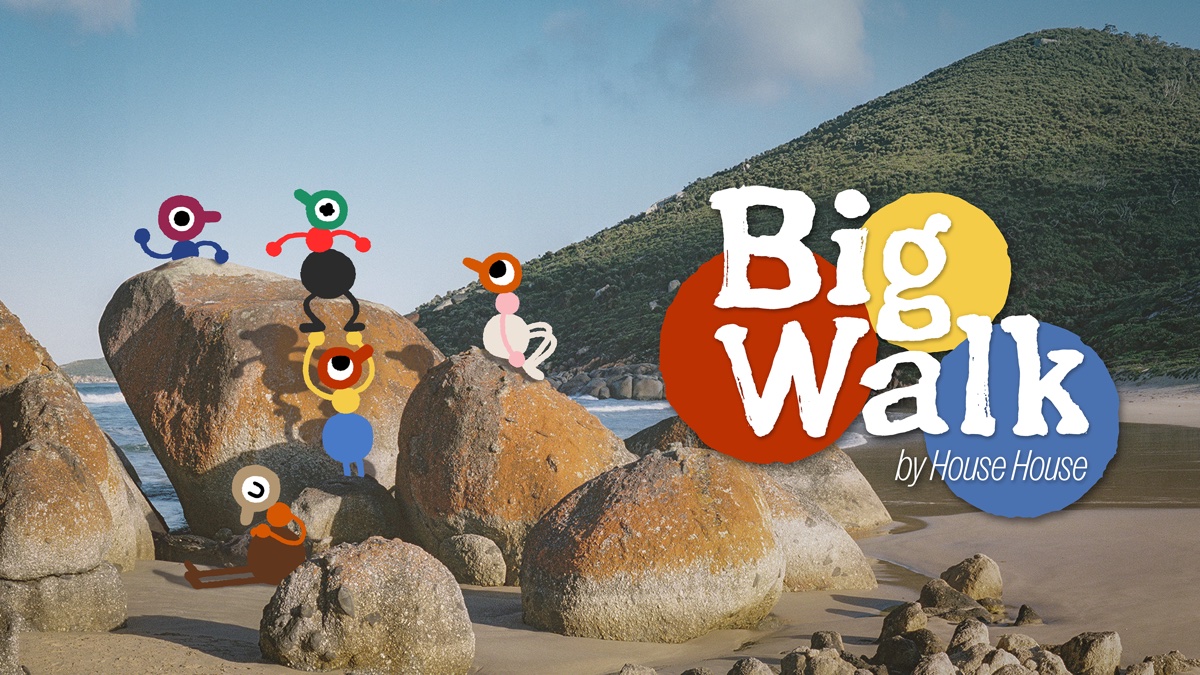
The Big Walk AI controversy has reinforced that impression. House House, the studio behind Untitled Goose Game, disclosed AI use and found its game at the center of a voting boycott by some IGF jurors and a wave of negative Steam reviews. One distinction matters immediately: the studio described technical troubleshooting, rather than generating art or music. The facts below were checked on November 12, 2026; the judgments that follow are my own.
How did Big Walk use AI?
According to the official FAQ, a shadow bug slowed the game by 50% for roughly 20 seconds at sunrise and sunset. After its own investigation and consultation with a Unity engineer failed to resolve it, the team extensively adapted a chatbot suggestion into about ten lines inside URP. House House estimates that AI-related work involved well under 0.1% of the code, with no other generative AI use in development.
That need not become a story about AI making the game or solving something no human could ever fix. What interests me is a developer finding a lead through another tool, revising it and taking responsibility for the result.
A juror boycott is different from an official IGF disqualification
On November 9, Austin Walker published a joint statement signed by 19 IGF jurors. They would not vote for games made with generative AI in any capacity, including code. They cited environmental, labor and creative harms, while explicitly stating that they did not represent the entire IGF or all its jurors.
Calling this “the IGF officially disqualified Big Walk” conflates separate things. The statement did not name a game. Its standard is nevertheless clear: even a good game will not receive these jurors’ votes if AI was used at all.
Steam reviews also shifted after the disclosure. Dexerto’s November 11 report counted 366 negative and 426 positive reviews on November 10, with the overall rating still Very Positive at the time of reporting. Negative reviews surged, but those numbers do not show that every player turned against the game.
Should purity of tools come before the game?
I do not dismiss every objection to AI. Consent over training material and the treatment of creative labor are reasonable concerns. Customers can consider production methods when deciding what to buy, and jurors have values of their own. In Walker’s explanation, programming is itself creative labor deserving respect.
Even so, I disagree with blanket rejection that ignores scope and outcomes. Should taking someone’s work without permission, shipping code without checking it, and investigating a bug before reviewing a proposed fix all receive the same judgment? Once the AI label ends the discussion, the questions of what went wrong and who was harmed can slip out of view.
At that point, opposition to AI starts to resemble a test of the developer’s purity more than criticism of the work. That is the artistic purism I object to: a game can be enjoyable and well made, yet the approved method of making it comes first.
Game engines are tools. Must AI be taboo?
Using an engine, a library or a debugger does not erase a developer’s creativity. Choosing tools, combining them, discarding bad ideas and revising the result are part of the craft. I find it hard to accept that using Unity or Unreal should itself cast doubt on a game’s soul.
To me, rejecting coding AI outright resembles insisting that real developers build everything from the ground up despite having a useful game engine available. Building your own systems can be worthwhile. More manual work, however, does not automatically make a better game.
Art and music lead to the same underlying question. When judging music made with a synthesizer or an image edited in Photoshop, I look first at expression and results. Generative AI brings additional issues, but the discussion should not stop at declaring that a new tool invalidates creativity. We should also ask what was made, whose rights were respected and who takes responsibility for the finished work.
Indie developers should compete by making better games
Players ultimately pay for a game. Are the controls satisfying? Is playing together funny? Is the experience worth the time? The effort invested in manual production cannot substitute for those things. I would choose a well-made game that used some AI over a dull game made entirely by hand.
Another developer using AI is already a competitor worth thinking about. If these tools expand what a small team can attempt, I would rather explore that possibility than spend my energy policing everyone else’s workflow. Reading, testing and refining the code remain the developer’s work too.
The competition I want to see is about who makes the better game, using new tools along the way. A developer’s artistic spirit can prove itself in what players experience, rather than in a declaration that AI was refused.
For a practical tool focused on how a game feels to play, see the game-feel skill introduction. More articles and games in development are collected under Game development.
Comments and questions
Post, edit or delete a comment using a name and password. Use a password you do not use elsewhere.