
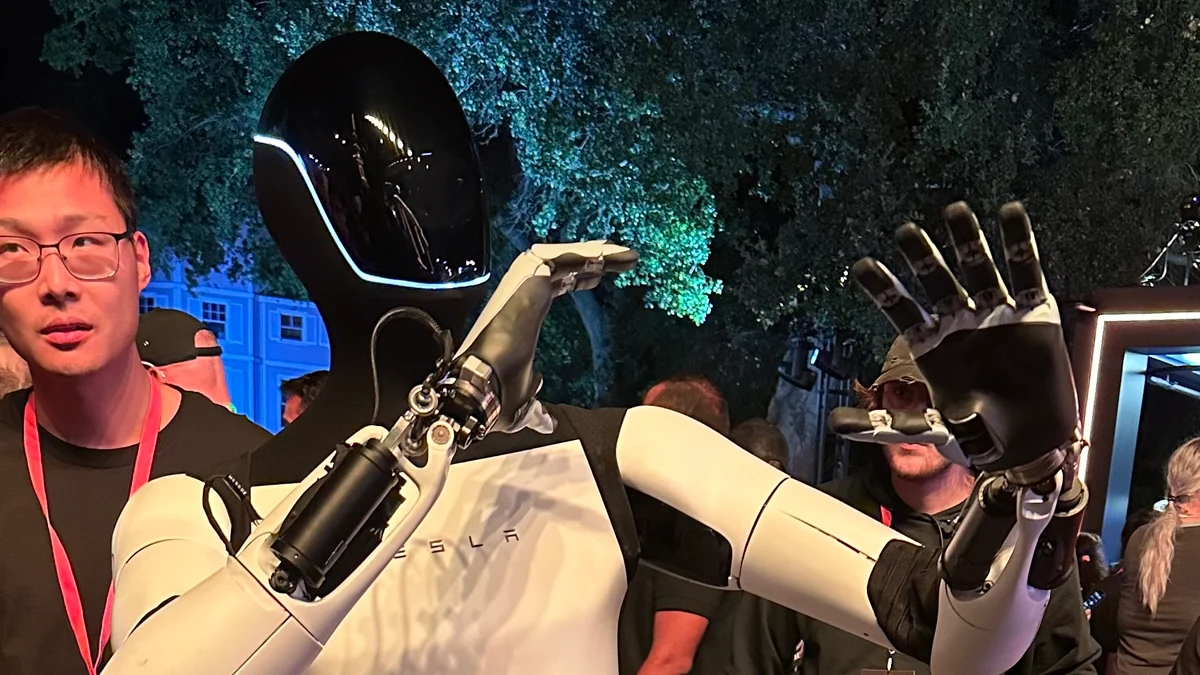
An Optimus hand needs to pick up small objects precisely and apply substantial force when a task calls for it. Even opening a jar means holding one surface steady while turning another, with contact changing throughout the movement. Motion, touch information and a structure that survives repeated use have to work together.
Tesla describes Optimus as a general-purpose humanoid for unsafe or repetitive work. Handling human tools and objects also means understanding what happens at the fingertips. Applying the work described on Tesla’s robotics page to everyday tasks makes the requirements easier to see.
Gripping and turning have to work together
In the October 2026 X Takeover interview, Elon Musk used driving a small screw into wood to illustrate precision combined with force. For jar lids, he described rubber skin slipping against the finger structure underneath. The discussion is in the original video at 50:05–55:17.
Breaking those two examples into steps provides a useful reading guide:
| Task | What the hand needs to do | What to look at |
|---|---|---|
| Pick up a small screw | Align fingertips with a small contact area | Position and fine finger movement |
| Drive the screw | Push the tool while turning it | Push direction and posture during rotation |
| Open a jar | Hold the jar and transfer torque to its lid | Slip against the object and between skin and finger structure |
Watching a hand close reveals only part of the task. The next questions are what force it transfers after grasping, and how it adjusts when contact changes.
Touch sensors also need a durable surface
Musk identified sensor damage, repeated flexing and replacement of worn rubber as connected design problems. The touch and skin discussion starts at 51:41.
Researchers outside Tesla address the same maintenance question. In an August 2026 tactile-fingertip paper, F. Richard Cottrell, Megha H. Tippur and Edward H. Adelson combined a protective film with a replaceable sensing cartridge, then evaluated abrasion and repetitive loading. The design considers both contact sensing and the parts replaced after wear. This is independent research, separate from Optimus.
What to look for in the next demonstration
Consider the conditions under which a demonstrated action continues to work:
- Different objects: Can it handle jars or tools with different sizes and surfaces?
- Repeated work: What happens during successive attempts, including slips and pauses?
- Maintenance: Is there information about replacing skin or sensors and recalibrating afterward?
These are questions to bring to future demonstrations. When comparing finger counts or joints, placing them alongside the intended job makes the useful performance requirements more concrete.
This article reworks Teslic Korea’s October 12, 2026 article. On November 11, I rechecked the original video segment and added the task table, independent tactile research and demonstration questions. The interview remains an October source.
Photo: Steve Jurvetson / Wikimedia Commons, CC BY 2.0. Cropped from an October 2024 event photograph.

Comments and questions
Post, edit or delete a comment using a name and password. Use a password you do not use elsewhere.